

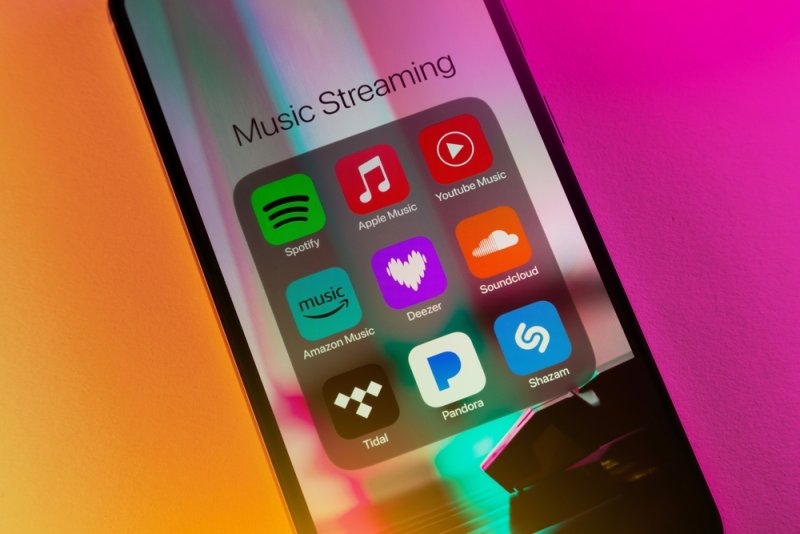
Giant tech corporations have convinced the masses that flat, lifeless, compressed audio is perfectly acceptable. The reality is that most casual listeners are happily paying monthly fees for absolute garbage sound quality. If you actually care about music, you have to evaluate the best music streaming services available right now. You cannot just blindly hand over your credit card to the platform with the most recognizable logo. Conducting the right music streaming service comparison exposes exactly which companies are actually delivering studio-level, lossless tracks and which ones are just feeding you mathematically butchered MP3 files.
Must Read: 7 Best TV Shows That You Must Add to Your Binge Watch List
The actual differentiator is raw bit-rate. Casual listeners do not care, but enthusiasts demand lossless audio that accurately replicates the physical recording studio. Platforms that cap your music streaming quality are actively harming the low-end bass frequencies and washing out complex vocal layers just to save amounts of server bandwidth.
Streaming platforms rely on algorithmic dopamine loops to keep you subscribed. The standout services ignore predictable radio generation and hire actual human curators to build playlists. They refuse to force-feed you viral pop garbage and instead push obscure, high-fidelity tracks that actually challenge your expensive listening hardware.
Before you jump into the best music streaming apps, you have to stop trusting marketing copy and look at the physical data streaming into your phone.
Platforms brag about library size while silently crushing the files to save bandwidth, completely ruining the dynamic range of the track.
Paying for elite music streaming platforms is completely useless if you pump the audio through a cheap Bluetooth connection that physically cannot transmit high-resolution data.
Some services actively refuse to let you upload your own purchased local files, forcing you to completely abandon decades of digital collecting just to stay trapped inside their ecosystem.
Stop defaulting to the most popular app on the digital store. These seven platforms are currently dominating the market, but each one has a massive, specific flaw you need to exploit or avoid.
The undisputed king for audiophiles. They ditched controversial formatting schemes and fully committed to pushing raw, uncompressed 24-bit/192kHz FLAC files directly to your high-end audio setup.
It integrates into the iOS ecosystem and completely undercuts the competition by throwing in massive Hi-Res Lossless and Spatial Audio libraries without jacking up the baseline subscription price.
Built exclusively for obsessive audio snobs. It completely ignores social sharing and podcasts, focusing entirely on delivering massive, uncompressed studio files alongside deep, human-written editorial reviews.
It is perfect for high-fidelity audio, but its algorithmic discovery engine is unmatched. It remains incredibly dominant purely because it socially integrates with everything, despite actively refusing to launch a lossless tier.
A cost-effective option if you are already a part of the Prime ecosystem. It quietly delivers massive Ultra HD audio tracks and completely undercuts rival subscription prices if you possess an active Prime login.
A massive European alternative that transfers your old playlists and delivers solid CD-quality streaming. It is the underdog that actively utilizes AI-driven discovery to break you out of a stagnant listening rut.
A great option for raw audio quality and stands unmatched if you demand live concert rips, obscure bootlegs, and massive video integration forcibly tied into one platform.
Do not just click the default individual plan. These corporations aggressively hide the actual cost-saving tiers deep in their confusing menus.
Stop paying twenty dollars a month for one account. Force your friends onto a centralized family plan and violently slash your monthly music streaming subscription plan bill by eighty percent.
If you have an active university email, you absolutely must weaponize it. Almost every major carrier will instantly cut your monthly premium in half just for proving you take college classes.
If you refuse to pay, you must accept the audio downgrade. Platforms will bombard you with unskippable ads, but it is the only way to legally access massive libraries without burning your own cash.
You are actively burning cash if you pay premium prices for highly compressed audio files. The market is absolutely flooded with massive corporations demanding your monthly subscription, but only a handful actually deliver studio-level fidelity. Stop being lazy and settling for the default app pre-installed on your phone. Whether you demand uncompressed FLAC files for a high-end DAC or just want a ruthless discovery algorithm to feed you new tracks, you have to intentionally lock down the best music streaming services that match your exact hardware.
Lossless audio means the file contains the exact, raw data recorded in the studio, without any algorithmic compression that chops off high and low frequencies to save server space. It sounds infinitely wider and deeper but requires massive data bandwidth and storage limits.
Standard Bluetooth lacks the physical bandwidth to transmit massive, uncompressed audio files. It forcibly crushes the data before it hits your wireless earbuds. To actually hear hi-res streaming, you must use a physical wired connection and an external DAC.
It completely depends on the mix. When an audio engineer aggressively masters a track specifically for Dolby Atmos, it creates a massive 3D soundstage. But when older songs are lazily upmixed by an algorithm, it sounds like echoing, artificial garbage.
Absolutely not. The payout models are brutally skewed toward massive pop stars, paying fractions of a penny per stream. If you actually want to financially support a niche indie band, you have to bypass the streaming algorithms and buy their physical merchandise directly.
Your phone's internal audio chip is a cheap, mass-produced bottleneck that destroys high-end audio files. An external Digital-to-Analog Converter (DAC) intercepts the raw digital data and processes it with precision, physically forcing a soundstage into your high-end headphones.
This content was created by AI